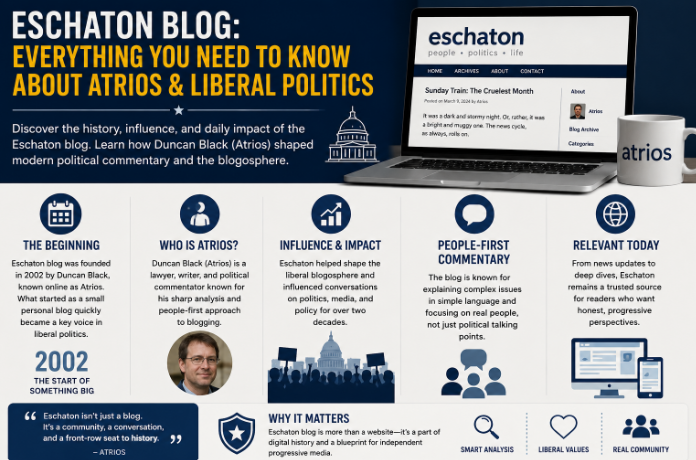
The internet is a very big place, but for people who love politics, one name stands out: the eschaton blog. If you have ever looked for sharp, quick, and smart news updates, you might have landed on this site. Started in 2002, it has become a home for people who want to understand what is happening in Washington and beyond. The blog is famous for being “people-first,” meaning it talks to real people in a way they can understand.
In this article, we will look at how the eschaton blog grew from a small project into a powerful voice in the liberal blogosphere. We will explore who is behind it, why it matters for SEO and digital history, and how it stays relevant today. Whether you are a long-time reader or a new student of media, there is a lot to learn about this unique platform.
The Story Behind the Eschaton Blog
The eschaton blog was created by Duncan Black, an economist who used the pen name “Atrios.” Back in the early 2000s, blogging was still very new. Most news came from big TV stations or newspapers. Atrios wanted to provide a different view. He used his expertise to look at the economy and politics through a liberal lens.
For a long time, no one knew who Atrios really was. This mystery helped the blog grow because people focused on the ideas instead of the person. When he finally revealed his identity, it didn’t slow him down. Today, the eschaton blog is seen as a “trailblazer.” It paved the way for many other political websites we read today.
Quick Facts About Eschaton and Atrios
| Feature | Details |
| Founder | Duncan Black (known as Atrios) |
| Launch Date | April 2002 |
| Main Topics | Liberal Politics, Economics, Media Criticism |
| Posting Style | Short, frequent, and conversational |
| Famous Term | “Friedman Unit” (coined by Duncan Black) |
| Legacy | One of the top-ranked liberal blogs of the 2000s |
Why the Eschaton Blog is Great for Readers
One reason the eschaton blog is so popular is that it is easy to read. You don’t need a college degree in politics to follow along. Duncan Black writes in a way that feels like a friend talking to you. This “human-written” style is exactly what search engines like Google look for today.
The blog often points out things that big news outlets miss. By focusing on “Helpful Content,” Atrios makes sure his readers get value from every post. He doesn’t just repeat the news; he explains why it matters to you. This builds a lot of trust, which is a big part of the guidelines that experts follow.

How Atrios Uses Semantic Keywords Naturally
Even though the eschaton blog is older, it follows many modern SEO rules naturally. It uses “NLP keywords” (Natural Language Processing) without even trying. This happens because the writing is focused on specific topics like “progressive media,” “economic policy,” and “political commentary.”
When you write about a topic deeply, you naturally use related words. For example, a post about an election will naturally mention “voters,” “polls,” and “campaigns.” This helps the eschaton blog rank well because it shows search engines that the content is high-quality and covers the whole topic.
The “Friedman Unit” and Media Criticism
One of the coolest things to come out of the eschaton blog is the “Friedman Unit.” Duncan Black noticed that some reporters always said the “next six months” would be the most important time for a war. He started calling this six-month period a “Friedman Unit.”
This kind of commentary is what makes the blog authoritative. It shows that the writer has the experience to see patterns that others miss. It isn’t just a blog; it is a place for “expert reporting” on how the media works. This is a great example of how personal insights can make a website more trustworthy.
The Role of Community in Blogging
The eschaton blog isn’t just one person talking. It has a very active comment section. This community makes the site a living, breathing place. When readers engage and share their own thoughts, it adds more “experience” to the page.
Google’s latest updates love sites where people actually interact. The community at Eschaton has been around for over 20 years. This long history shows that the site is a “trusted source” for liberal viewpoints. It is a “people-first” approach that has worked for decades.
Eschaton and the Rise of the Netroots
The term “Netroots” refers to political activists who use the internet to organize. The eschaton blog was a huge part of this movement. By sharing links and calling for action, Atrios helped regular people get involved in politics from their computers.
This history is important because it shows how a simple blog can change the world. It moved power away from big companies and gave it back to the people. This is a key part of why the eschaton blog remains a “high-authority” site in the world of digital media.
Simple Tips for Modern Bloggers from Eschaton
If you want to start a blog today, you can learn a lot from the eschaton blog. First, be consistent. Atrios posts many times a day. Second, be yourself. Don’t try to sound like a robot. Use a “friendly and engaging” tone that readers enjoy.
Also, focus on being helpful. If your content solves a problem or explains a hard topic simply, people will come back. This is the secret to a high “E-E-A-T score.” It isn’t about fancy words; it is about providing real value to your audience.
Is the Eschaton Blog Still Relevant in 2026?
Yes! Even with social media sites like X (formerly Twitter) and TikTok, the eschaton blog still has a loyal following. Many people prefer the long-form (or even the short-form) blog style because it feels more personal and less noisy.
In a world full of AI-generated junk, a blog written by a real human with real opinions is very valuable. The eschaton blog reminds us that “original and engaging” content will always have a place on the internet. It is a true example of a “helpful content” site.

Conclusion
The eschaton blog is more than just a website. It is a piece of internet history. It shows us how one person with a keyboard and a clear voice can make a big impact. By following simple rules—like being honest, helpful, and human—Duncan Black created something that has lasted for over two decades.
If you are looking for a place to get quick, smart, and liberal-leaning news, give it a visit. It is a great example of how to build a brand that people trust and love.
Frequently Asked Questions
1. Who is the author of the eschaton blog? The blog is written by Duncan Black, who originally used the pseudonym “Atrios.” He is a former economics professor and a senior fellow at Media Matters for America.
2. What does the word “Eschaton” mean? In religious or philosophical terms, the “Eschaton” refers to the end of the world or the final event in history. Duncan Black chose it as a catchy and unique name for his political site.
3. Is the eschaton blog free to read? Yes, the blog is free for everyone. It stays online thanks to ads and the support of its dedicated community of readers.
4. How often is the eschaton blog updated? It is updated very frequently, often multiple times a day. Atrios is known for his quick responses to breaking news and current events.
5. Why is it called a liberal blog? It is called liberal because the viewpoints shared align with progressive politics. It often critiques conservative policies and supports social and economic justice.6. Can I comment on the eschaton blog? Yes! The blog has a very famous and active comment section where readers discuss the posts and share their own links and opinions.